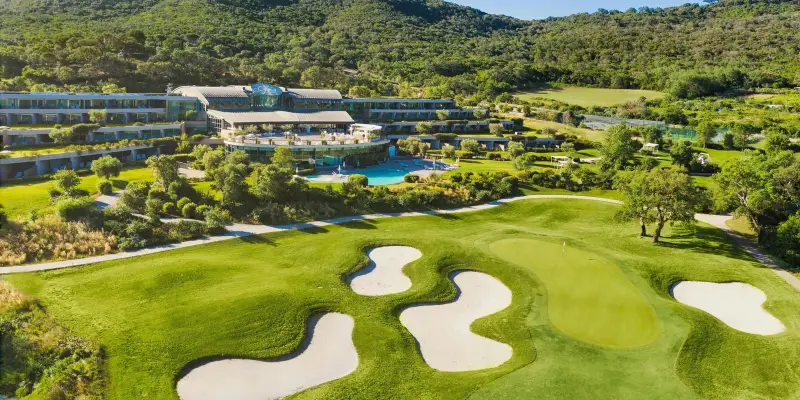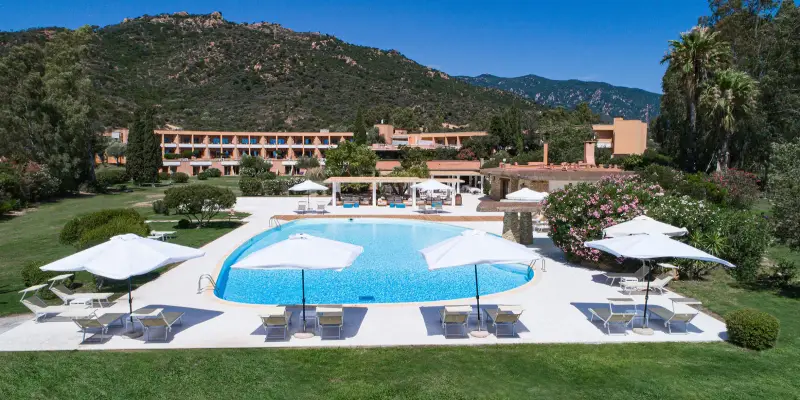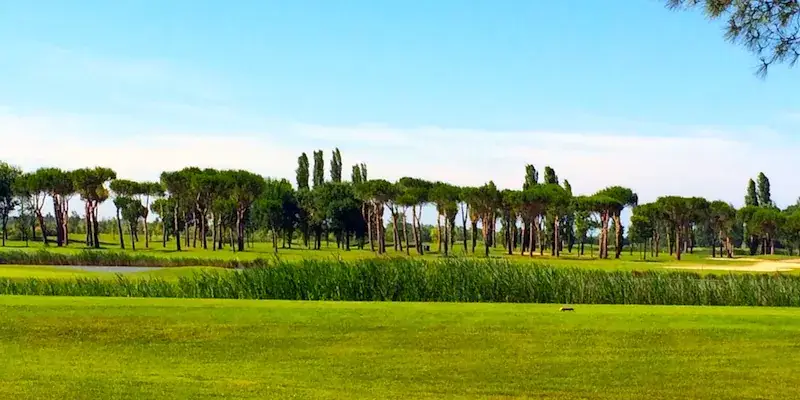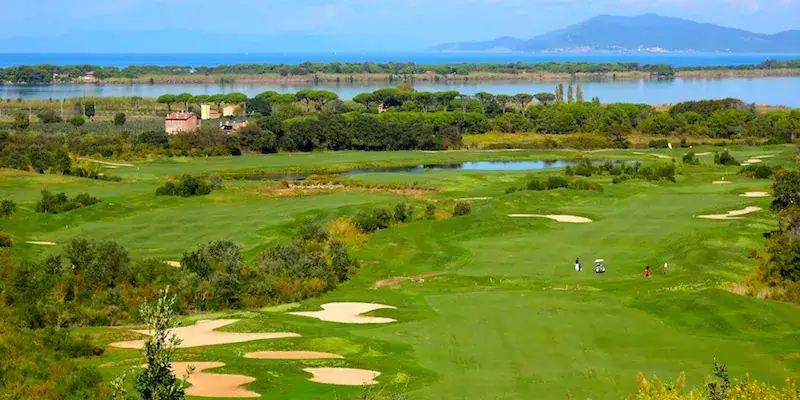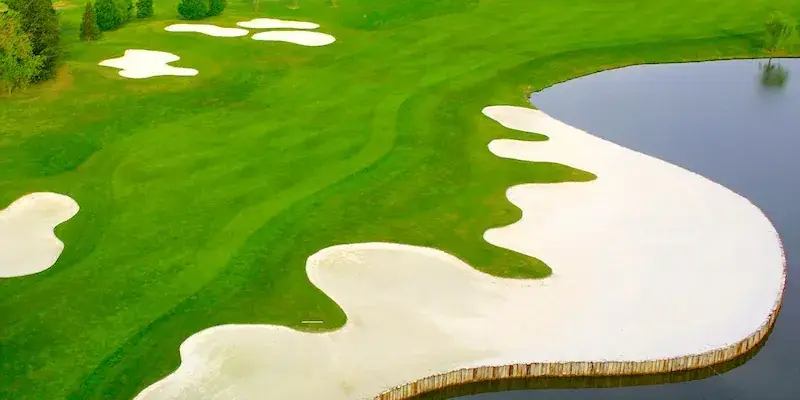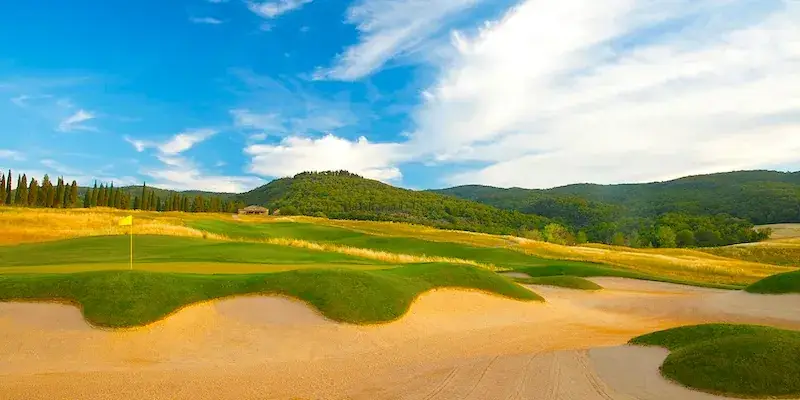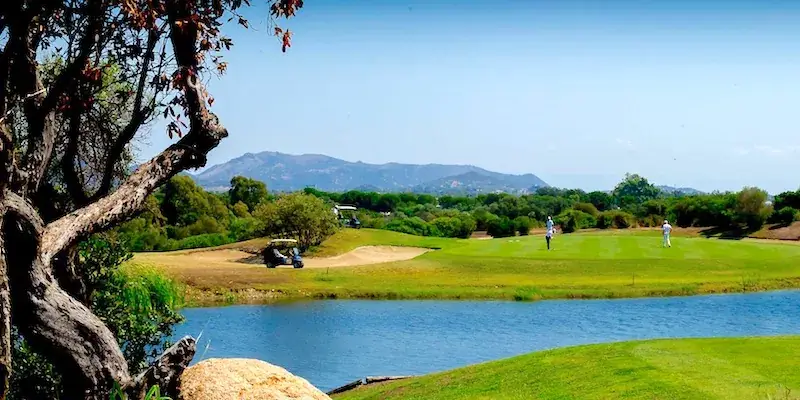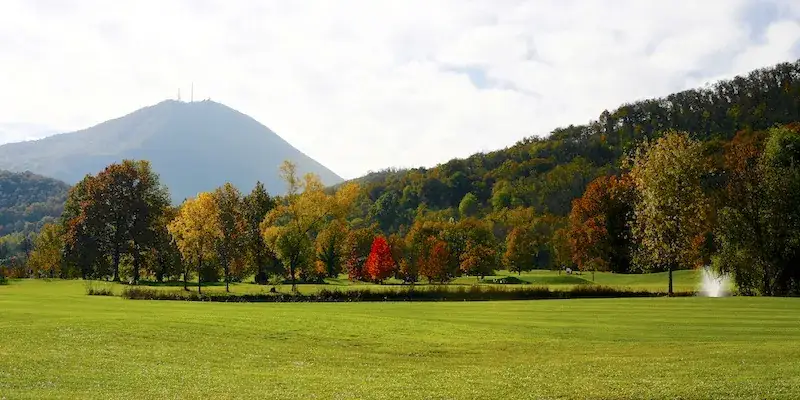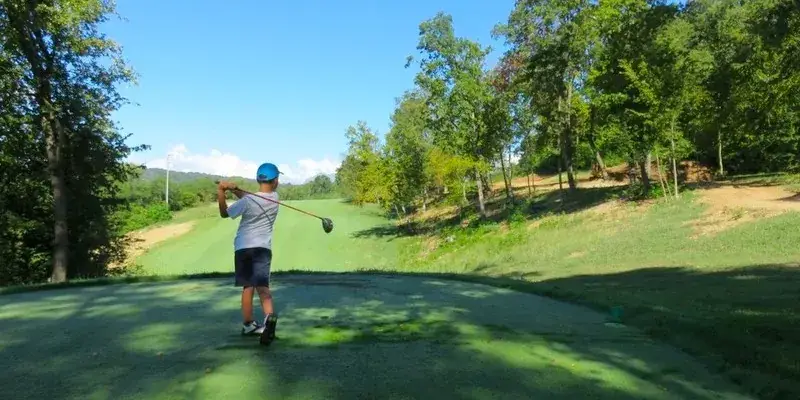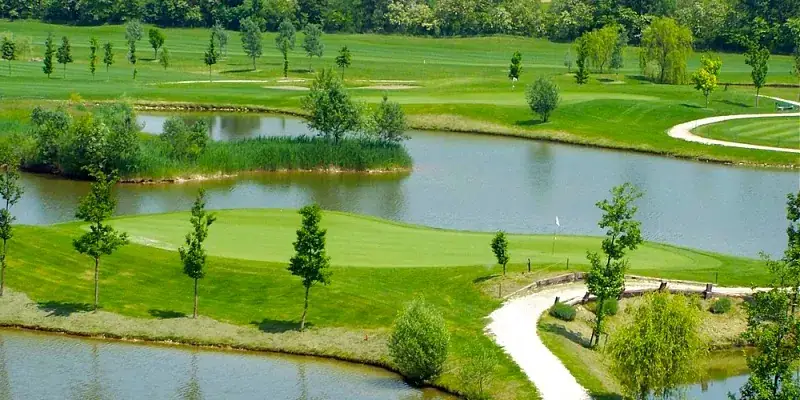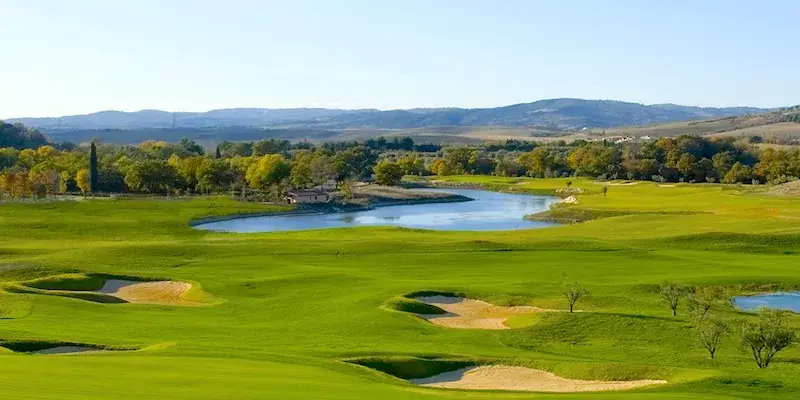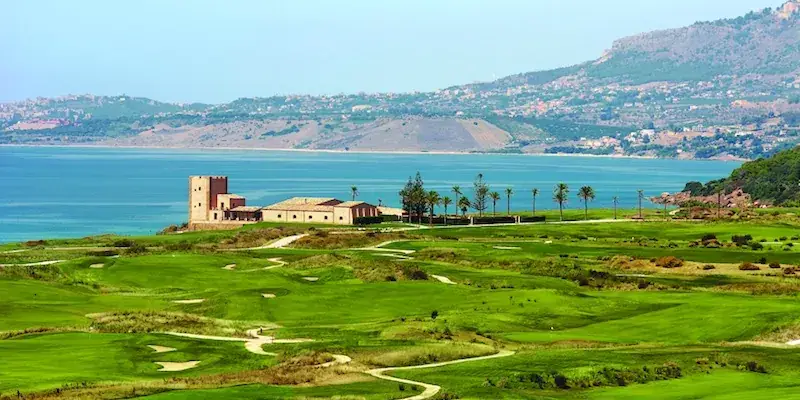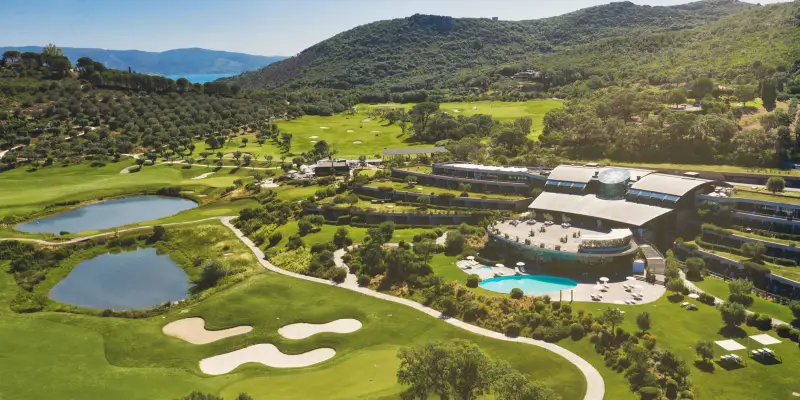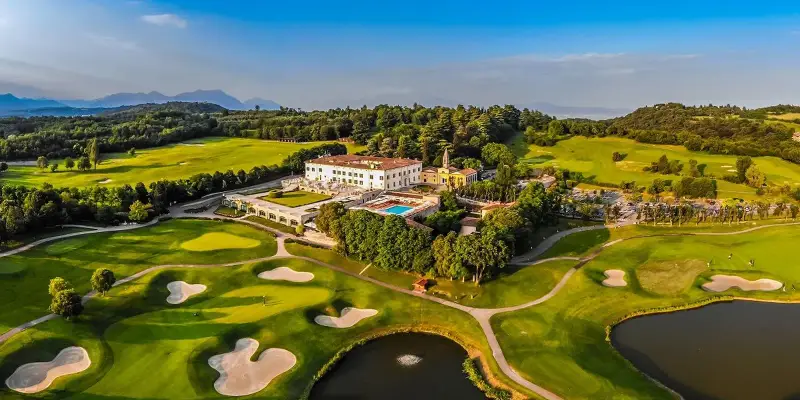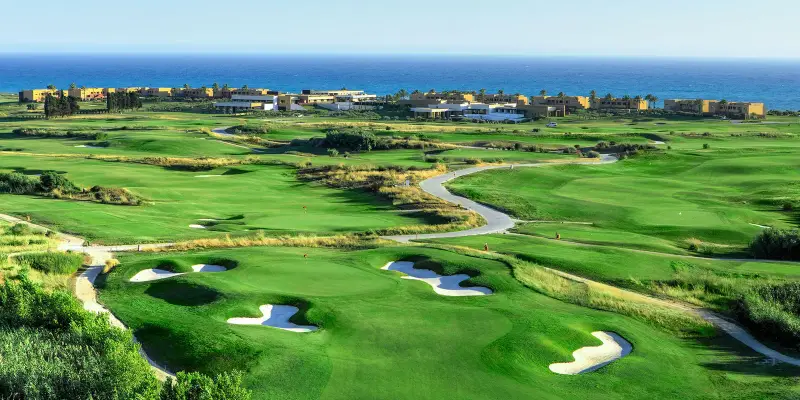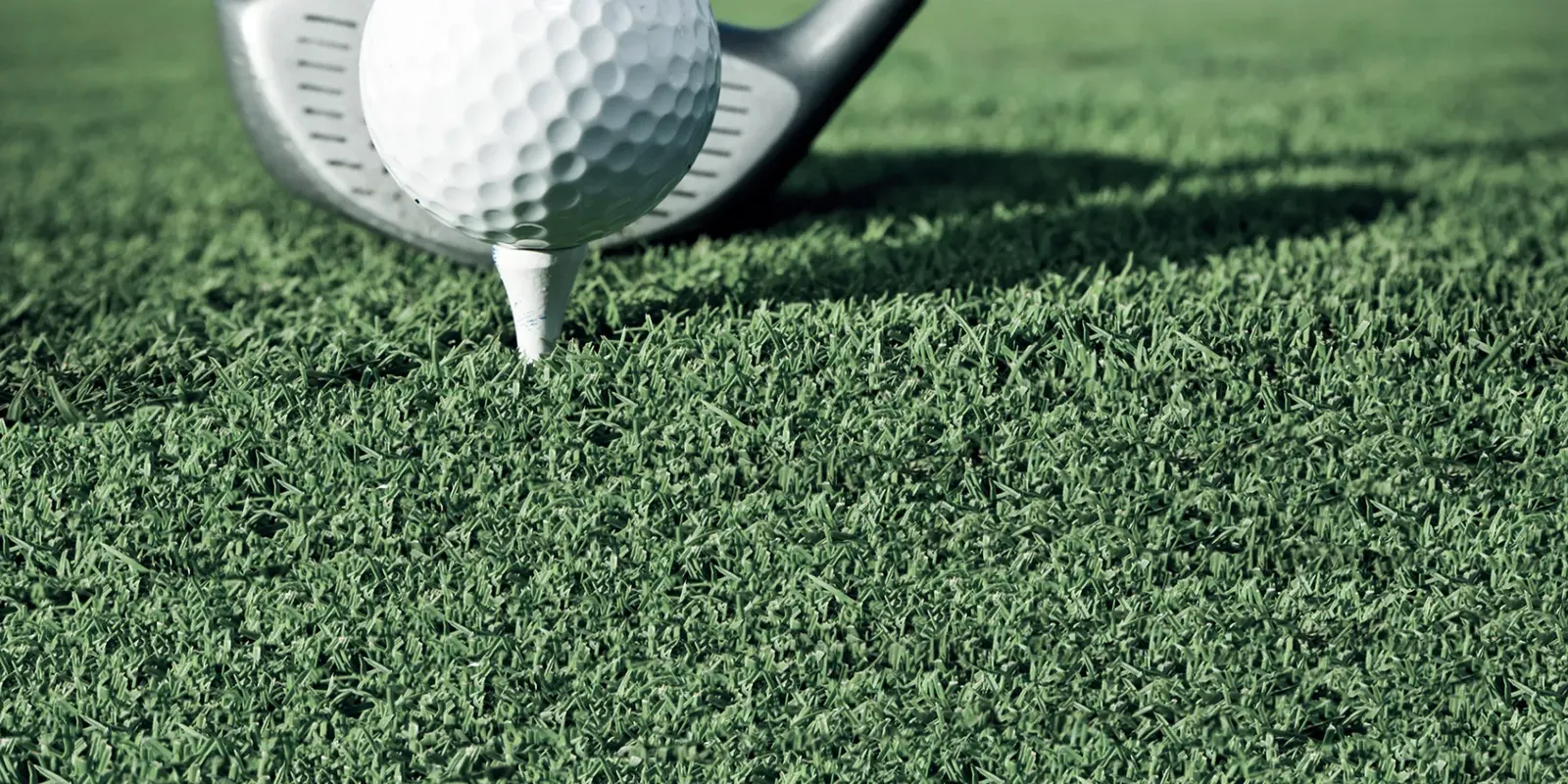
On the fairways at Cervia the grass is cut every two days to 10 millimetres and, the club says, pesticides have been eliminated since the switch to Bermuda. Behind the green of an Italian course lie maintenance choices the golfer never sees; here are the ones the clubs declare.
A golf course is a lawn tended every day, and the lawn is thirsty. Water, and the products used to keep the grass healthy, sit at the centre of the debate on golf's sustainability. On Italian courses the answers differ from club to club: here is what the clubs declare and what it means for those who play there.
Why the grass is changing: Bermuda
The first choice to emerge from the clubs is the switch to Bermuda, a warm-season grass. According to the agronomic literature, warm-season grasses generally use less water than cool-season ones, and Bermuda is particularly tolerant of heat, drought and foot traffic.
For Italian courses, the clubs give the same reason:
| Club | What it declares |
|---|---|
| Adriatic Golf Club Cervia | Since 2008 fairways and tees across the 27 holes converted to Riviera-variety Bermuda; the conversion eliminated pesticides and cut water use |
| Golf Club Frassanelle | Tees and fairways in Bermuda since 2014-2015: less water and fertiliser, no chemical products |
| Is Molas | The Yellow nine was reseeded with Bermuda, which withstands heat better |
| Castello di Tolcinasco | Bermuda chosen to cut water use and plant-protection treatments significantly |
| Golf Club Le Fonti | Reseeded in 2014 with Bermuda Patriot to allow play all year round |
| Verdura | Bermuda grass being introduced on the West Shore, work in progress |
The price of warm-season grass: winter and building work
Bermuda also has its costs. When temperatures drop, management changes: at Cervia, for example, the course is overseeded in autumn with ryegrass, a cool-season grass, so that the turf stays green through the winter. And the changeover requires works, which affect those who play. At Verdura, for example, according to the resort as of 3 October 2026 the West Shore is open but, until spring 2027, some areas may not be in the best condition; the Executive course is closed for the same works. When booking a course under conversion, it is worth asking which holes and which periods are affected.
Water: less consumption, more recovery
The second chapter is irrigation. Three examples, each declared by the club:
- Is Molas, in Sardinia, is replacing the irrigation system across the whole complex to cut consumption by at least 30%: 18 holes are already finished.
- Castiglion del Bosco, in Montalcino, following the 2023-24 investment has new targeted irrigation that has cut consumption by 20 per cent. According to the designer Phil Smith it is the most sustainable course he has designed in twenty years.
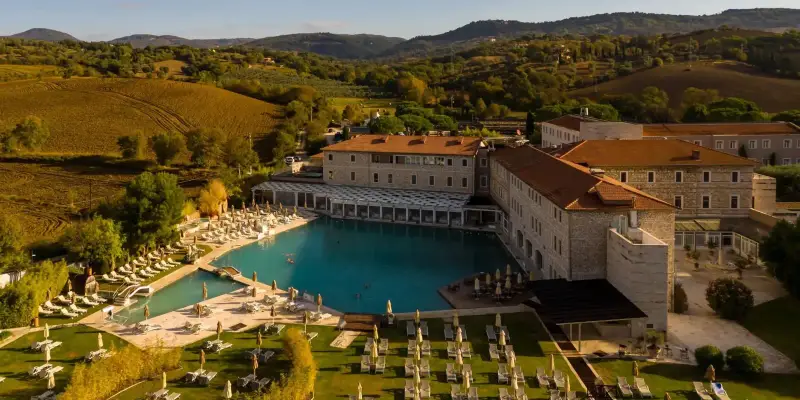
- Terme di Saturnia has drainage linked to the lakes, which collect rainwater for reuse, and grass varieties that allow, according to the resort, a saving of about 30% of water.
At Botanic Golf Sacuba, near Olbia, the turf was seeded with low-water-use grass mixtures, to conserve the area's reserves.
Less chemistry: from organic management to certificates
On the question of products, the most radical route is organic management. Golf Club Il Mulino, in Cerrione, declares that since January 2018 the course has been looked after without herbicides and fungicides, with the aim of letting the grass resist insects and disease on its own. At Saturnia the greenkeepers treat the turf every week with thermal water, whose sulphur prevents fungal disease, with no insecticides or pesticides. At Argentario the course has been BioAgriCert certified since 2006, for maintenance using natural products only, according to the resort.
Two references help in navigating the claims. GEO Certified, from the GEO Foundation, is based on data recorded by the club and an independent verifier. "Impegnati nel Verde" is the award of the Italian Golf Federation.
Energy and nature: beyond the turf
Sustainability does not end at the green. The Argentario Golf & Wellness Resort declares that since 2026 it has had a photovoltaic plant with 888 panels producing more than 545,000 kWh a year, about a quarter of its needs, and heat pumps in place of diesel boilers; since opening, more than 400,000 plants have been put in the ground. The same club hosted the Italian Open in June 2025: according to the resort it was the first edition with ISO 20121 certification for sustainable event management.
At Is Arenas, the course was born in a pine forest planted in the 1950s over more than 3,000 hectares of sand, and the junipers now number over 400,000.
How to read the clubs' claims
The savings figures are data declared by the clubs. A percentage saving with no reference year and no point of comparison says little; a certification with an external verifier says more, but it attests a method, not a level of consumption. For those booking, the practical thing is to ask the club which holes are affected by works and in which periods.
To combine golf with a stay at a resort that documents its commitment, three addresses: the Terme di Saturnia, the Verdura Resort, where motor vehicles are banned and only electric vehicles circulate on the estate, and the Is Molas Resort, where the irrigation is being renewed.
Curiosities
- One centimetre. At Cervia the Bermuda grass on the fairways is cut every two days to 10 millimetres.
- A 19th hole. At Castiglion del Bosco, after the 18th there is the "Brunello Hole", a short par 3 where a magnum of Brunello is played for.
- Five million pines. At Is Arenas the pine forest was planted with Marshall Plan funds.
Frequently asked questions
Why are so many golf courses switching to Bermuda?+
The clubs declare lower water use and fewer treatments: warm-season grasses such as Bermuda generally use less water than cool-season ones, according to the agronomic literature.
Does Bermuda grass turn brown in winter?+
It depends on management. At Cervia, in autumn, the club overseeds with ryegrass so that the turf stays green through the winter.
Does a sustainable golf course really exist?+
There are clubs that declare documented reductions, for example 30% of water at Is Molas and Saturnia or 20% at Castiglion del Bosco. These are figures declared by the clubs themselves.
What does organic course management mean?+
It is maintenance without herbicides and fungicides: at Il Mulino, for example, the club declares that it has used no glyphosate, fungicides, insecticides or herbicides since 2018.
How can you tell a truly sustainable course?+
One reference is GEO certification, with an independent verifier, or the "Impegnati nel Verde" award of the Italian Golf Federation. It is not enough on its own, though: it is worth reading what the club declares.
Can you play a course under conversion?+
Usually yes, but with limits: at Verdura, as of 3 October 2026, the West Shore is open with areas not at their best until spring 2027 and the Executive course is closed.