The first three editions of the Italian Open were played on Mottarone, one course sits at 2,035 metres, and Turin has a nine-hole course you can play for 25 euros. Here is how to find your way around Turin, the wine hills and Lake Maggiore.
Piedmont is not the region a golfer from abroad packs for first, and that has its advantages. It has historic courses (Claviere dates from 1923, Stresa hosted the Italian Open in 1926), 36 holes designed by Robert Trent Jones Senior on the doorstep of Turin, a parkland course on the moraine of the Serra d'Ivrea at 590 metres above sea level and, in summer, a layout on ski slopes above two thousand metres. All of it with green fees often between 50 and 70 euros on the clubs' price lists.
The route follows the geography: Turin, the wine hills, the Biella area, Lake Maggiore and the Alpine resorts. Prices come from the clubs' price lists, with the year where the club states it; those without a year should be reconfirmed before you book.
How Piedmont golf is laid out: four areas, four characters
The most useful way to think about Piedmont is by area, because each one has a different kind of golf.
- Turin and surroundings. A system of urban and parkland courses: two 36-hole venues in the former Savoy hunting reserve at La Mandria, a nine-hole course in the city, another on the banks of the Po at Moncalieri.
- Langhe, Roero and Monferrato. Hills planted with vines and hazelnut trees, with courses often carved into the farmland: Cherasco, Carmagnola, Poirino, Fubine, Tassarolo.
- Biella and Canavese. The balcony of the Serra d'Ivrea, with Biella Le Betulle as the national benchmark.
- Lake Maggiore and Verbano. Mountain and lakeside courses between Stresa, Verbania and Premeno, with the Borromean Islands in the background.
Set apart are the Alpine resorts, Sestriere and Claviere, open only in summer.
Turin and La Mandria: two 36-hole venues and a nine-hole course in the city
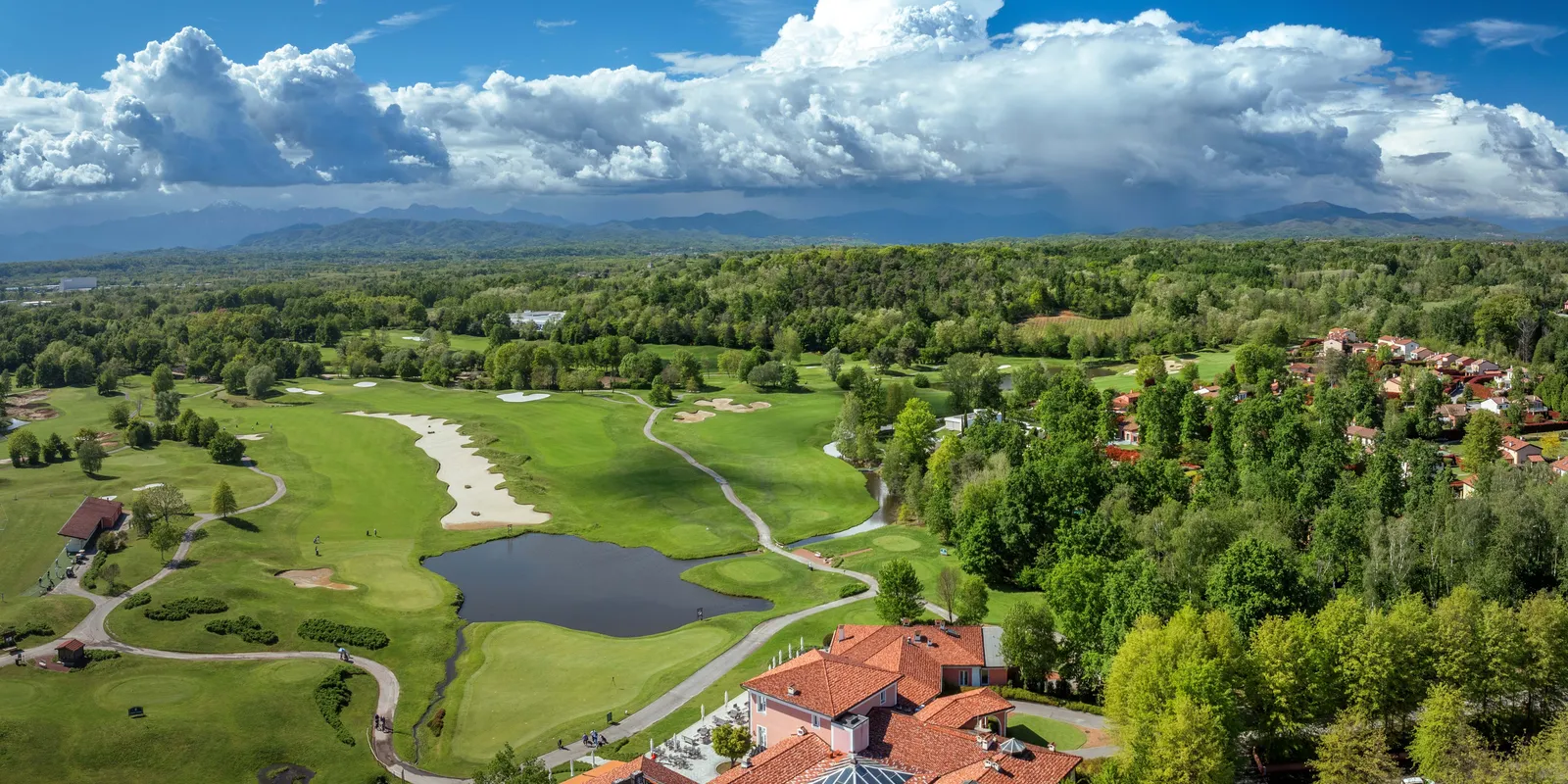
The strongest hub is the Mandria regional park, once a Savoy hunting reserve, close to the Reggia di Venaria Reale. Two very different clubs share it.
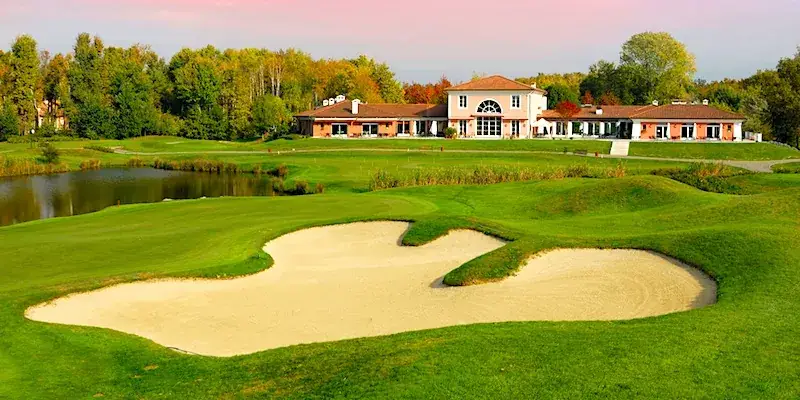
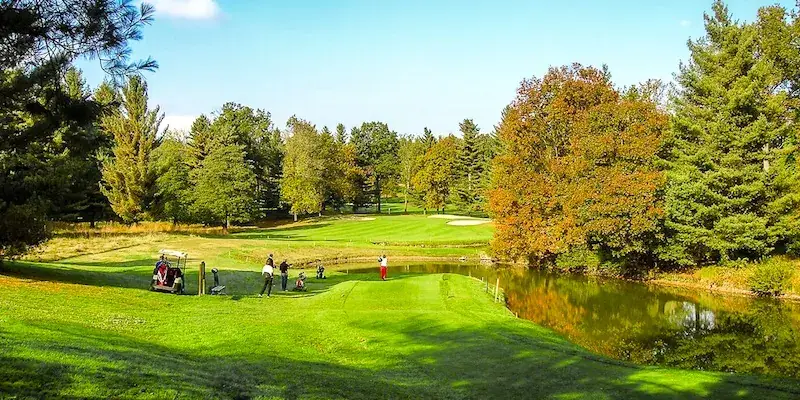
Royal Park I Roveri was founded in 1971 at the wish of the Agnelli family. It has 36 holes: the Allianz Course, designed by Robert Trent Jones Senior (par 72, 6,566 metres from the championship tees), which hosted the Italian Open from 2009 to 2012, and the Allianz Bank Course by Michael Hurdzan and Dana Fry, from 2006, more open and dotted with ponds. In 2011 the Gazzetta dello Sport called the 17th hole of the Allianz Course "the most beautiful hole in Italy". The published price list shows 160 euros a round for adults (no reference year), 80 for under-18s.
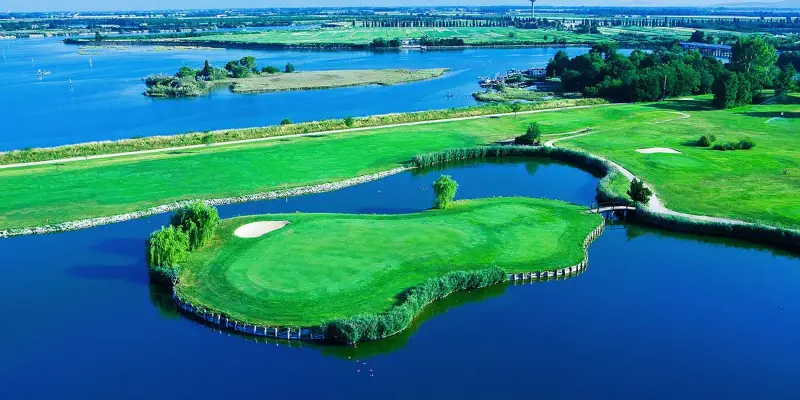
Circolo Golf Torino is the doyen: founded in 1920 by eleven members, it moved here in 1956. It has two 18-hole par-72 courses, the Blu (John Morrison, home of the 2013 and 2014 Italian Opens) and the Giallo, where the green on the 14th sits on an island. The club notes that Edoardo and Francesco Molinari grew up here; Francesco won the Open Championship at Carnoustie in 2018. Visitors pay 120 or 140 euros on weekdays and 140 or 160 on weekends and holidays, price list without a year.
Anyone looking for something simpler has three alternatives:
- Stupinigi, nine holes inside Turin, which the club presents as the only city course in the regional capital: 25 euros for 18 holes on weekdays (price list without a year);
- Moncalieri, a nine-hole course from 2002 in the Parco delle Vallere, ten minutes from Turin according to the club;
- Le Fronde at Avigliana, 18 holes, par 71, at the mouth of the Val di Susa on a former dynamite factory, where the 12th hole is called "Il Nobel".
Langhe, Roero and Monferrato: golf among the vines
Here golf is played with the farmland in view. Golf Club Cherasco is an 18-hole, par-72 parkland course at the confluence of the Tanaro and the Stura, with the Langhe on one side and Monviso in the background; in the lakes, the club says, live grass carp and tortoises. The latest online price list is from 2025: from 65 to 80 euros on weekdays for non-members, from 90 to 100 at weekends. The club closes on Tuesdays that are not public holidays.
At Carmagnola, in the Roero, the club I Girasoli states that it built its 18 holes, par 71, without moving any earth: natural-grass fairways on the original undulations. The price list from 1 January 2026 asks 50 euros on weekdays and 65 at weekends. At Poirino, La Margherita (18 holes, par 72) won the men's Serie A1 national title in 2011 and in the 2026 high season charges 65 or 85 euros to FIG members, 80 or 100 to foreign members.
Monferrato is home to Margara at Fubine: 36 holes, par 72, two courses (the Glauco Lolli Ghetti with its famous ring of water at the 11th, and La Guazzetta, more modern), 22 editions of the Challenge Tour hosted and two Ladies Italian Opens. The website's price list, without a year, gives 70 euros on weekdays and 100 on weekends and holidays; in the restaurant in the evening, men need long trousers and closed shoes.
Further east, among the Gavi vineyards, Golf Club Colline del Gavi (27 holes) was born on 1 May 1990, after the first driving range failed: the ground was so steep that the balls rolled back. Today it charges 50 euros on weekdays and 80 on weekends and holidays for 18 holes. Not far away, at Capriata d'Orba, Villa Carolina offers 36 holes by two different architects, Cornish & Silva (La Marchesa) and Graham Cooke (Paradiso).
Biella and Canavese: Le Betulle, the national benchmark
If you are going to play only one Piedmont course of pure sporting quality, Golf Club Biella Le Betulle is the most defensible choice. In 1956 the architect John Morrison told the founders that on the Biella side of the Serra d'Ivrea, the largest moraine in Europe, the most beautiful course in Europe outside the British Isles could be built. The result is a par 73 of 6,534 metres at 590 metres above sea level, which according to the club has topped the Top Ten ranking of Il Mondo del Golf 18 times.
The 2026 tariff for 18 holes is 75 euros on weekdays and 110 on weekends and holidays for FIG members, 90 and 130 for other guests (VAT included). There is a golf hotel on the course, open from March to November. From April to October the course is open every day; until 30 March it closes on Mondays.
For those who prefer nine holes, the Biella area has Il Mulino at Cerrione, with the ruin of a seventeenth-century mill in the middle of the first fairway, and Canavese has the Golf Club San Giovanni dei Boschi, at around 400 metres above sea level, where the old Cascina Fantasia farmhouse forms the backdrop to the 9th hole.
Lake Maggiore and Verbano: from Stresa to Bogogno
The Piedmont shore of the lake has the most varied courses. The Golf Alpino di Stresa, on Mottarone, calls itself the cradle of the Italian Open: the first three editions, from 1926, were played here, and in 1927 Percy Alliss won after a play-off in which he shot 67, the course record. It has nine holes to be played twice (par 69); the 6th is a par 5 the first time round and a par 4 the second. The 2026 price list asks 50 euros on weekdays and 60 on weekends and holidays.
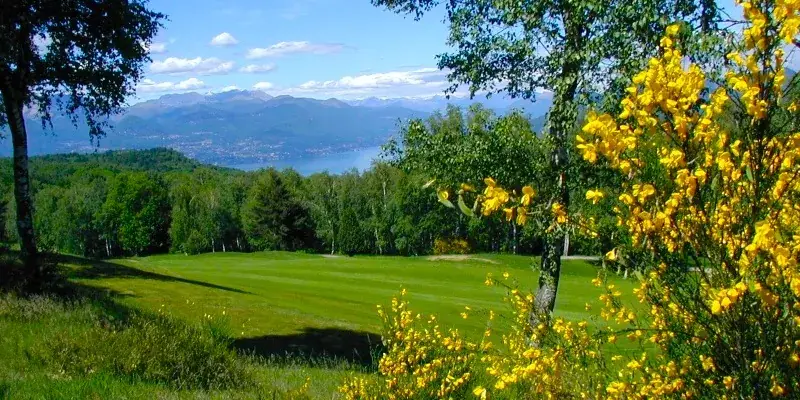
The Golf des Iles Borromées, at around 600 metres on the AltoVergante plateau, has 18 holes, par 72 (6,122 metres), and from the 10th hole, on clear days, you can see the skyscrapers of Milan and four lakes. The 2026 green fee is 70 euros on weekdays and 85 on weekends and holidays; in 2026 the club is open every day from 6 April to 31 October. On the opposite shore, at Fondotoce, the Golf Sporting Club Verbania can be reached by train: Verbania-Pallanza station is a few metres from the entrance. For an 18-hole round the 2026 price list asks 55 euros from Monday to Friday and 70 at weekends.
Further south, almost on the border with Lombardy, is Bogogno Golf Resort: 36 holes by Robert Von Hagge, opened in 1997, the Conte (links-style) and the Bonora (parkland). Since 2006 it has been the only Italian venue for the first stage of the European tour's Qualifying School. The 2026 price list runs from 90 to 135 euros, depending on season and day.
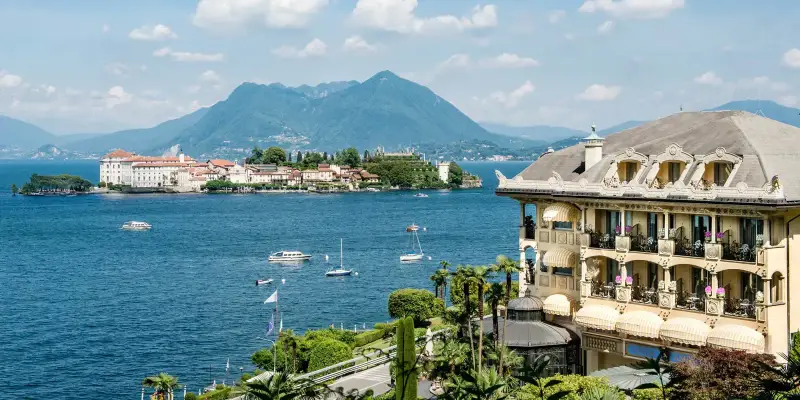
For a place to stay, the address of reference is Villa e Palazzo Aminta in Stresa, facing the Borromean Islands. The hotel has no course of its own, but lists nine affiliated clubs, the nearest (Iles Borromées and Alpino) 5 kilometres away, and the concierge books green fees. Milan Malpensa is 45 kilometres away, according to the hotel.
Sestriere and Claviere: high-altitude golf
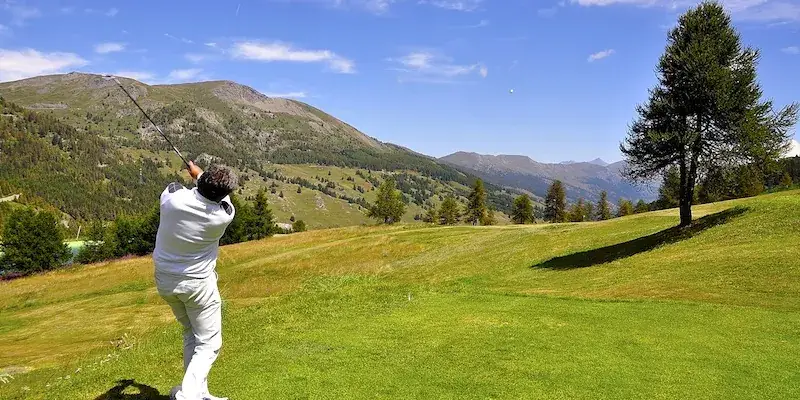
Golf Club Sestrieres stands at 2,035 metres and the regional tourist board presents it as the highest course in Europe. Edoardo Agnelli built it in 1932 with British architects, and its 18 holes, par 65, run across the slopes that host ski races in winter. In 1936 Henry Cotton won the Italian Open here with 268 strokes. The season runs from June to September; the club publishes no official price list, so to book you need to phone 0122 799435. A little further on, at Claviere (1923), a nine-hole course is among the five oldest clubs in Italy.
When to go and how to get around
| Area | Playing season | Note |
|---|---|---|
| Turin, Langhe, Monferrato | March–November; some courses, such as Colline del Gavi and Verbania, say they are always open | check the closing day (often Tuesday) |
| Biella Le Betulle | open every day from 1 April to 31 October | closed on Mondays until 30 March |
| Lake Maggiore | according to the tourist district, open all year except January | Iles Borromées: 6 April–31 October in 2026 |
| Sestriere, Claviere | June–September | ski slopes in winter |
For flights, the useful airport is Turin Caselle for Turin, Langhe and the Biella area, Milan Malpensa for Lake Maggiore and Bogogno. From Lake Maggiore to Monferrato you will need a car or a transfer in any case: the courses are scattered among the hills (Verbania, reachable by train, is the exception).
Curiosities
- A course above a dynamite factory. At Le Fronde, where the 12th hole is played today, dynamite was made until the 1950s.
- Golf bought in 170 pieces. The land at Biella was put together in 1956 by buying from about 170 owners, in an Italy with only eleven 18-hole courses.
- The record of 65. In 1965 Alfonso "Lillo" Angelini finished the Torino Open with 65 strokes; the record stood until 1999.
- A truffle cup. Cherasco's 2026 calendar includes the Coppa del Tartufo Bianco d'Alba, on 4 October.
Frequently asked questions
What is the best golf course in Piedmont?+
It depends on the criterion. For titles and recent history, Royal Park I Roveri (four Italian Opens, 2009-2012) and Circolo Golf Torino; for the quality of the layout according to the specialist press, Biella Le Betulle, which the club says came first 18 times in the Top Ten ranking of Il Mondo del Golf.
How much does a green fee cost in Piedmont?+
On the clubs' price lists it ranges from about 25 euros (Stupinigi, nine holes, no year) to 50-70 euros for most 18-hole courses; Bogogno in 2026 rises to 90-135 euros and Royal Park charges 160 euros. Always check the current price list.
Can you play golf in Turin without leaving the city?+
Yes: Stupinigi is a nine-hole city course and Moncalieri, on the Po, is ten minutes from the centre according to the club. The big La Mandria courses are at Fiano, near the Reggia di Venaria.
When is the best time to play in Piedmont?+
Spring and autumn for Turin, Langhe and Monferrato. Sestriere and Claviere can be played only from June to September, while the Lake Maggiore district says its courses are open all year, except January.
Where can you play near Lake Maggiore?+
The nearest addresses to Stresa are Golf des Iles Borromées (18 holes) and Golf Alpino on Mottarone (nine holes), both 5 kilometres from Villa e Palazzo Aminta according to the hotel; at Verbania there is the Golf Sporting Club with 18 holes.
Where was the Italian Open played in Piedmont?+
On Mottarone (Stresa) for the first three editions, from 1926; at Sestriere in 1936; then at Circolo Golf Torino (1999, 2013, 2014) and at Royal Park I Roveri (2009-2012).