Ask for a cappuccino in Trieste and you will be served a caffelatte; order a «capo in b» and a macchiato arrives in a small glass: Italian coffee has rules that no menu explains.
Anyone who comes to Italy to play golf soon learns one thing: the day begins and ends in a bar. Before the tee time, after the eighteenth green, in front of the clubhouse, coffee is the ritual that marks the hours. Yet ordering it properly is not obvious: it comes down to unwritten rules and a basic vocabulary that changes from city to city. Three stops, Trieste, Turin and the Canavese, link coffee to a golf course.
What an espresso really is
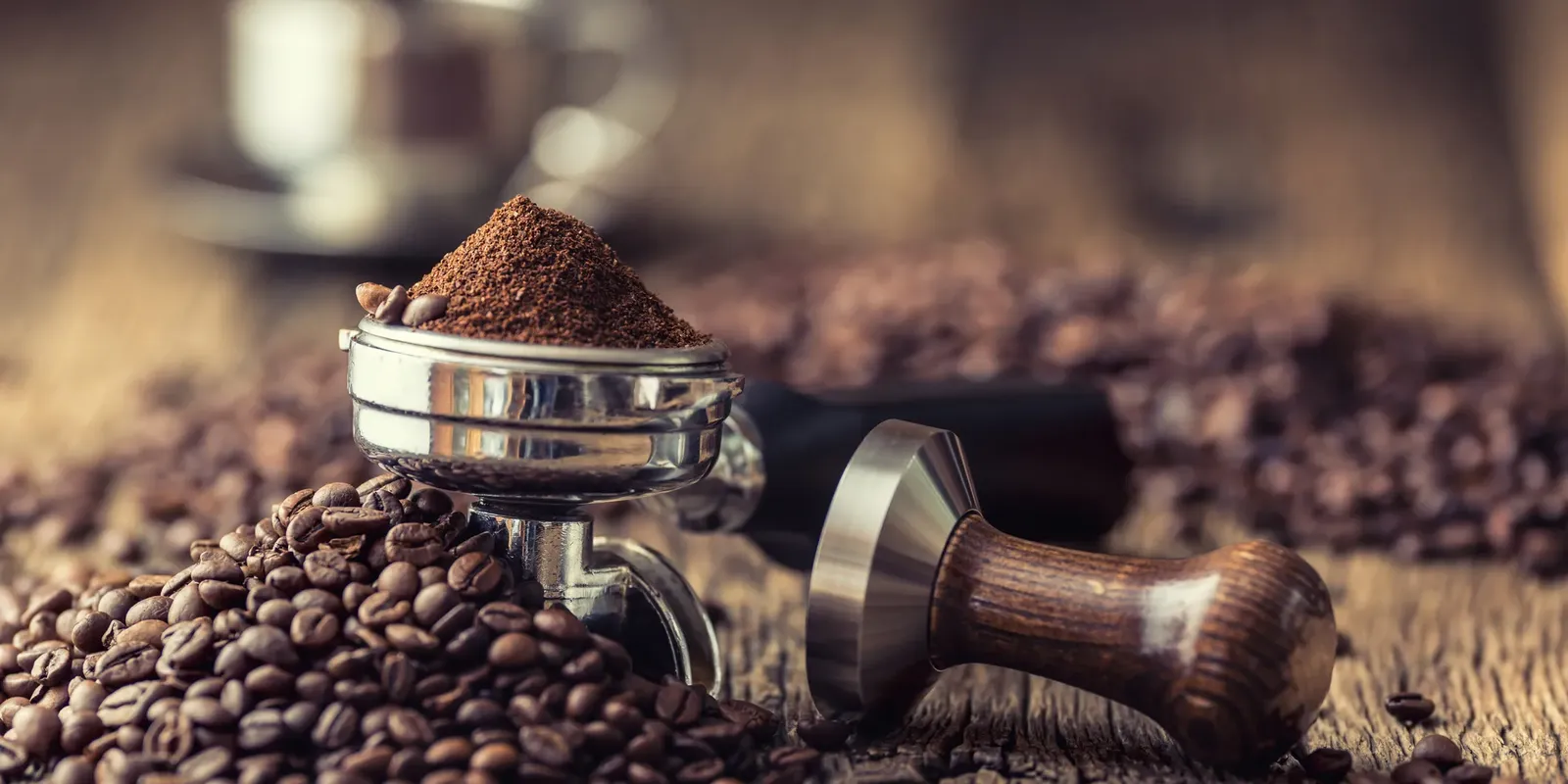
In Italy «un caffè» means an espresso, and nothing else. It is a short drink: according to the dedicated Wikipedia entry, the standard volume is 25-30 ml, extracted in about 25 seconds at a pressure of 9 atmospheres through roughly 7-9 grams of finely ground coffee.
The machine is an Italian story. Luigi Bezzera patented his model on 19 December 1901, with a removable portafilter; Desiderio Pavoni bought the patent in 1902 and began production, and it was he who used the name «caffè espresso» at the Milan Fair of 1906. The crema, the hazel-coloured foam that covers the cup, arrived with the lever machine of Achille Gaggia, patented in 1947, which pushed the water through at 9-10 atmospheres.
How to drink it: at the counter, not at the table
The habits are precise. A cappuccino is normally drunk only in the morning, at breakfast; after lunch or dinner you ask for an espresso, taken standing at the counter.
The essential vocabulary
| If you say... | You get... |
|---|---|
| Un caffè | An espresso |
| Un macchiato | An espresso with a drop of steamed milk |
| Un cappuccino | Espresso with hot milk and foam, in the morning |
| Un caffelatte | More milk, in a large cup; in Trieste it is the name for a cappuccino |
| Un deca | A decaffeinated espresso |
Trieste: coffee with a different vocabulary
In Trieste nobody orders «an espresso»: coffee is called nero. A capo is the macchiato, a capo in b is the same served in a small glass (the «b» stands for «bicchiere», glass), a goccia or gocciato is a coffee with just a drop of milk, and a caffelatte is what elsewhere is called a cappuccino. Friuli Venezia Giulia's tourist board also mentions the special, a coffee with a dusting of cocoa.
This is no whim: in 2024, writes Il Post, the coffee economy in Trieste turned over about 900 million euros and employs almost 2,000 people; about a fifth of the 600,000 tonnes of coffee Italy imports every year passes through the city's port, and the city has ten roasting companies. Three historic cafés still follow customs from the Austrian era: waiters in bow ties, printed newspapers on the tables and a small glass of water beside the cup, which was used to judge the quality of the water.
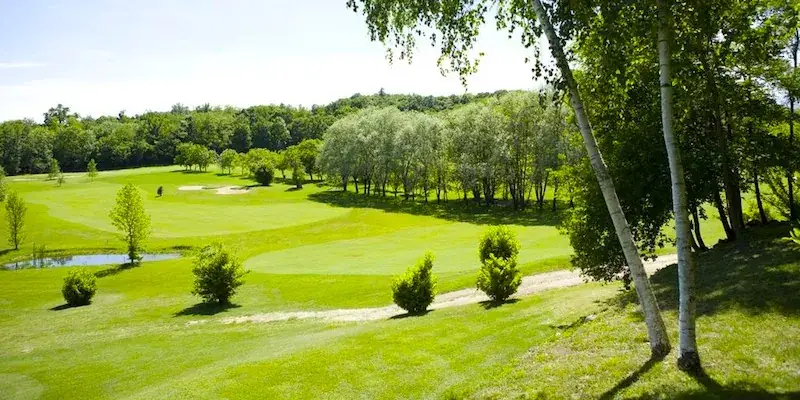
For golf, the stop is the Golf Club Trieste at Padriciano: 18 holes, par 70, at 350 metres above sea level on the Karst, open all year except on Tuesdays that are not public holidays. The course was built by the Anglo-Americans at the end of the Second World War and handed over to Trieste's golfers at the start of 1955.
Turin: the bicerin and the Savoy park
In Turin coffee is drunk in three layers. The bicerin is a hot drink of coffee, chocolate and milk cream, served in a glass. According to tradition it was invented in 1763 at the Caffè Al Bicerin, in Piazza della Consolata; in 2001 it was recognised as a traditional agri-food product of Piedmont. It descends from an eighteenth-century drink, the bavarèisa, with the same ingredients but served in rounder glasses and sweetened with syrup.
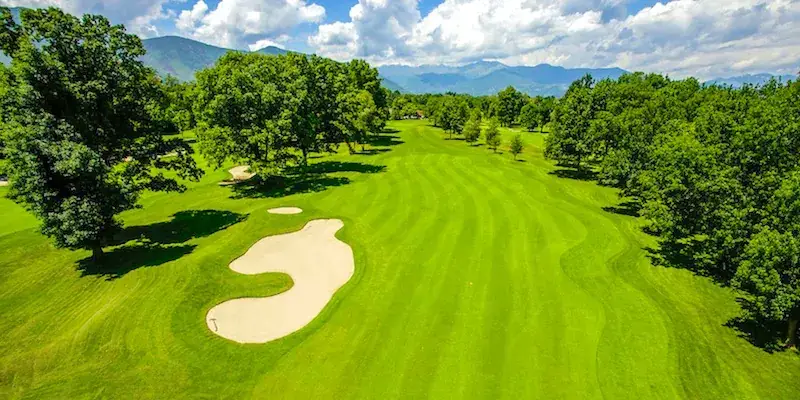
The reference course is the Circolo Golf Torino La Mandria: 36 holes on two 18-hole courses, Blue and Yellow, both par 72, inside the regional park that was once the Savoy hunting reserve. The club has played here since 1956.
The Canavese: coffee and a newspaper in the clubhouse
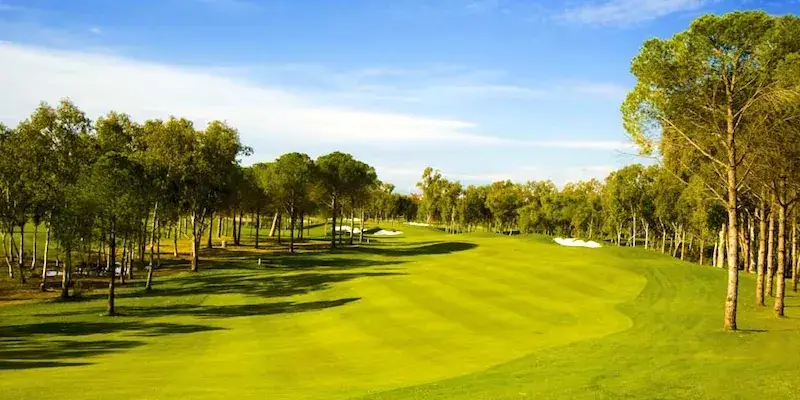
You do not need a big city for a good coffee with a newspaper. At the Canavese Golf & Country Club the clubhouse, the club explains, is open to everyone: you can have a coffee with a newspaper, an aperitif or try the specialities of the kitchen.
The suspended coffee: a Neapolitan custom
If in a bar in Naples you hear someone say «un sospeso», it is not a mistake. The caffè sospeso means buying one extra coffee and leaving it for the first stranger who asks for one. According to the writer Riccardo Pazzaglia, it comes from the arguments over who would pay at the bar. In 2011 a Suspended Coffee Day was established, on 10 December.
Curiosities
- The patent date. The modern espresso comes from a patent filed on 19 December 1901.
- The glass of water. In Trieste's historic cafés it is served with the cup to judge the quality of the water.
- The shrinking roasters. According to Il Post, roasting companies in Italy have fallen from 4,000 in the 1980s to fewer than 800 today.
Frequently asked questions
How do you order a coffee in Italy?+
You ask for «un caffè», and an espresso arrives. For more milk you say «macchiato» (a little) or «cappuccino» (a lot), the latter normally in the morning.
Can you order a cappuccino after lunch?+
You can, but it is not the custom: cappuccino is a breakfast drink, while after meals people drink an espresso, usually at the counter.
What is a capo in b in Trieste?+
It is a macchiato served in a small glass: «capo» means the macchiato, «b» the glass («bicchiere»).
What is a bicerin?+
It is a hot Turin drink made in layers of coffee, chocolate and milk cream, born according to tradition in 1763 in Piazza della Consolata.
What is a caffè sospeso?+
A coffee paid for in advance by one customer and left for someone who cannot afford it; it is a custom of Neapolitan origin.
How long is an Italian espresso?+
According to Wikipedia, 25-30 ml extracted in about 25 seconds.