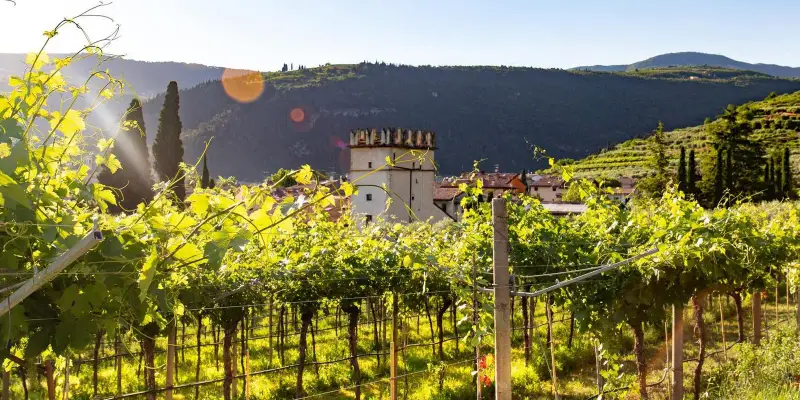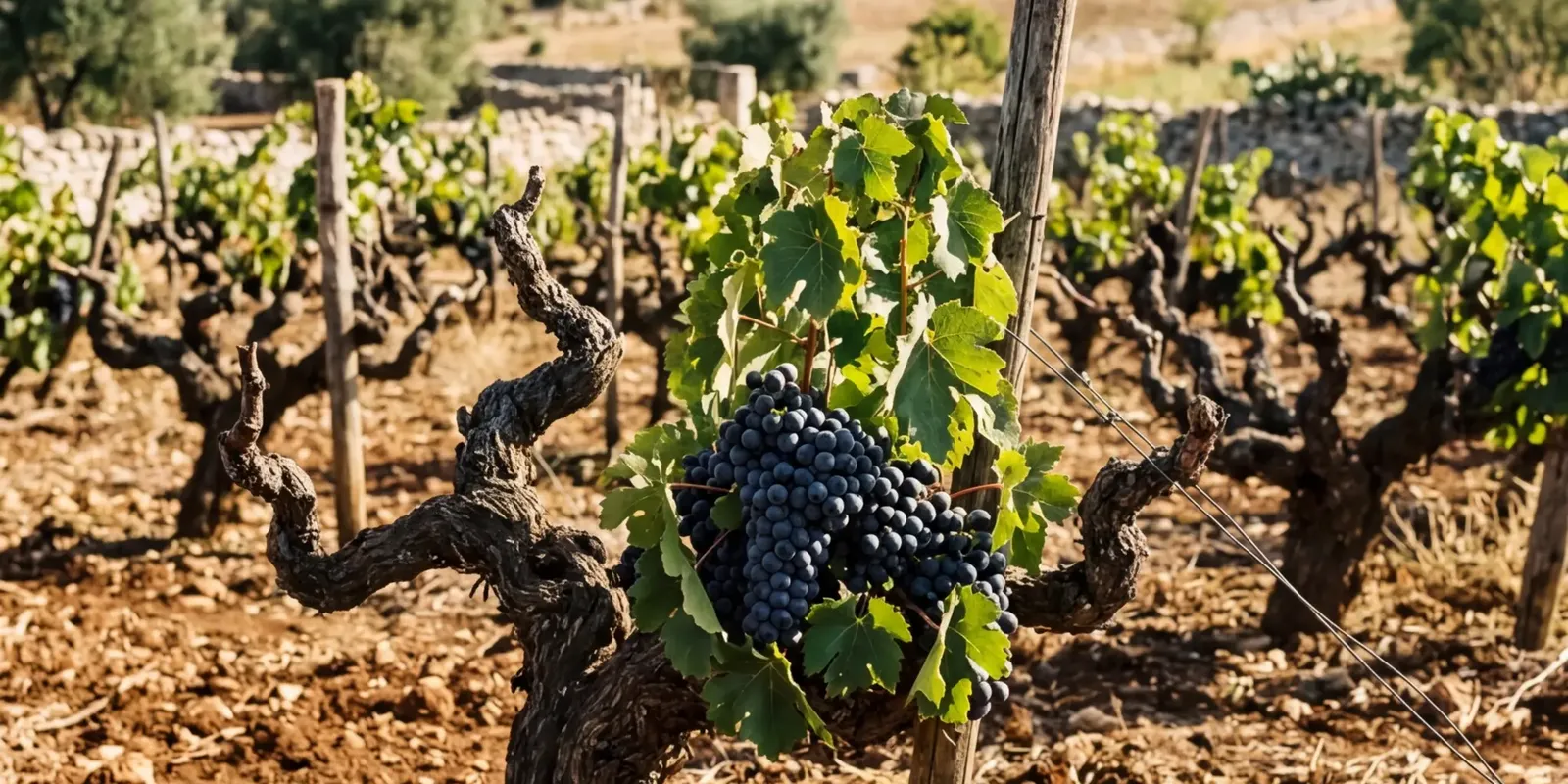
Primitivo di Manduria must be at least 85% Primitivo, cannot exceed 18 grams of sugar per litre, and the Riserva spends two years in the cellar: yet in Savelletri, where you sleep in masserie with a golf course, that wine is not made locally.
Those who play golf in Fasano often drink Primitivo, yet Apulia's most famous Primitivo is not made in Fasano. Primitivo di Manduria has a production zone defined by law, and the Savelletri area does not appear in that list of municipalities. The wine and the table of the masserie where you sleep after your round belong to two different geographies, and both deserve attention.
Primitivo di Manduria DOC: what the production rules say
The Primitivo di Manduria name is reserved for red wines made from at least 85% Primitivo; the remainder may come from other non-aromatic black grape varieties authorised for cultivation in the provinces of Taranto and Brindisi. There are two types: Primitivo di Manduria and the Riserva.
The figures in the rules, in the text amended by ministerial decree of 7 March 2014, are as follows:
| Primitivo di Manduria | Riserva | |
|---|---|---|
| Minimum natural alcohol of the grapes | 13.00% vol | 13.50% vol |
| Minimum total alcohol at consumption | 13.50% vol | 14.00% vol |
| Residual sugar | no more than 18 g/l | no more than 18 g/l |
| Release to market | after 31 March following the harvest | two years after that 31 March |
| Ageing | — | 24 months, at least 9 of them in wood |
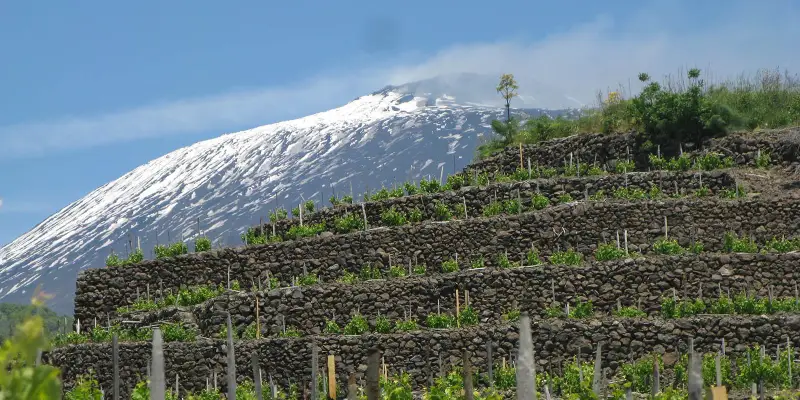
The rules describe the colour as intense red, tending to garnet with age, and the taste as "from dry to medium-sweet". For the Riserva they add a nose "sometimes with a hint of plum". The maximum yield is 9 tonnes of grapes per hectare, new vineyards may not have fewer than 3,500 vines per hectare, and among the permitted training systems is the Apulian alberello (bush vine).
The zone: Taranto and Brindisi, but not Fasano
The production zone lies in the provinces of Taranto and Brindisi. In the former it includes, among others, Manduria, Sava, Lizzano, Maruggio and Avetrana; in the latter only Erchie, Oria and Torre Santa Susanna. Fasano is not on the list.
For anyone staying in Savelletri this has a practical meaning: if you find a Primitivo di Manduria on the wine list, the bottle comes from another part of Apulia, and the winery is not around the corner. Guests who wish to visit it must plan a proper excursion, and the hotel concierge is the right person to ask how.
Dolce Naturale: a wine apart, with its own DOCG
Less well known than the dry red, Primitivo di Manduria Dolce Naturale is a DOCG, recognised by decree of 23 February 2011; before that it was a type within the DOC. The rules require grapes with at least 16% vol natural alcohol and a wine of 16% vol total, of which 13% actual, with residual sugar of not less than 50 g/l. The taste is described as sweet, velvety and characteristic. The maximum yield is lower than for the DOC: 7 tonnes per hectare.
In practice, it is the glass for the end of a meal: a choice to make at the table, not on the course.
The table of the Savelletri masserie
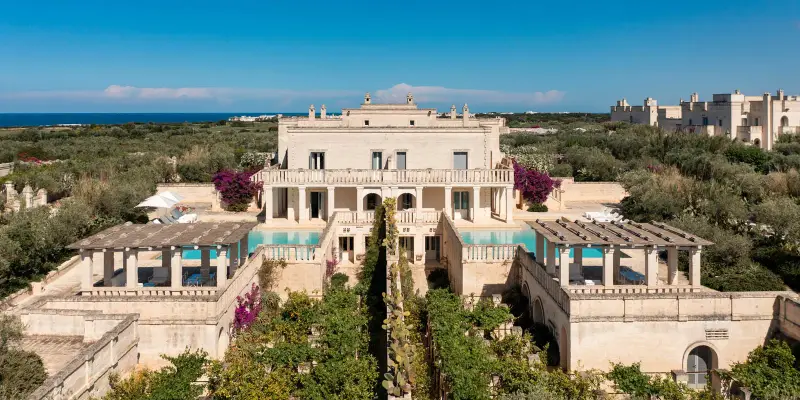
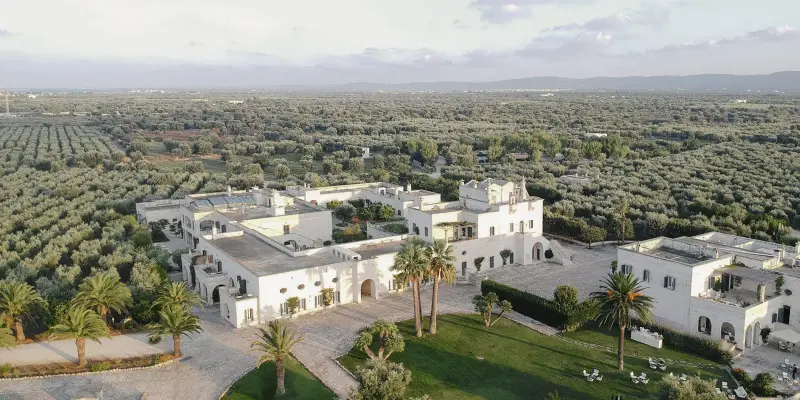
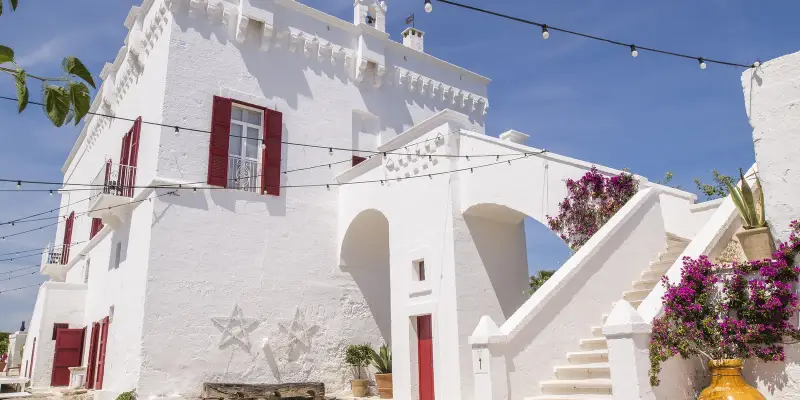
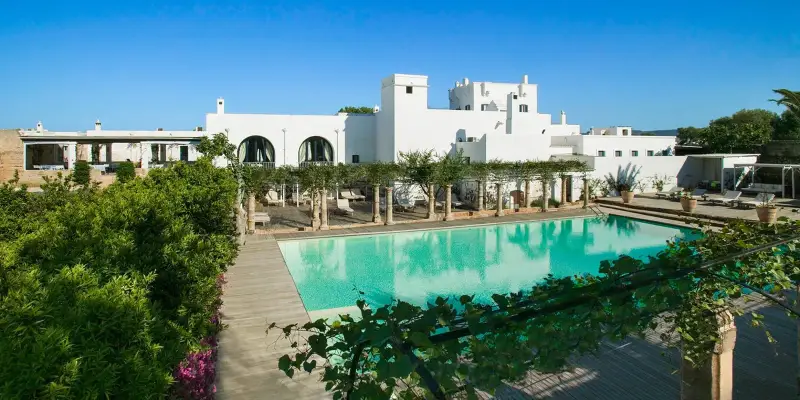
The fortified masserie of Savelletri began as towers and farmhouses, and today they are hotels with a distinctive kitchen. Here is where to eat.
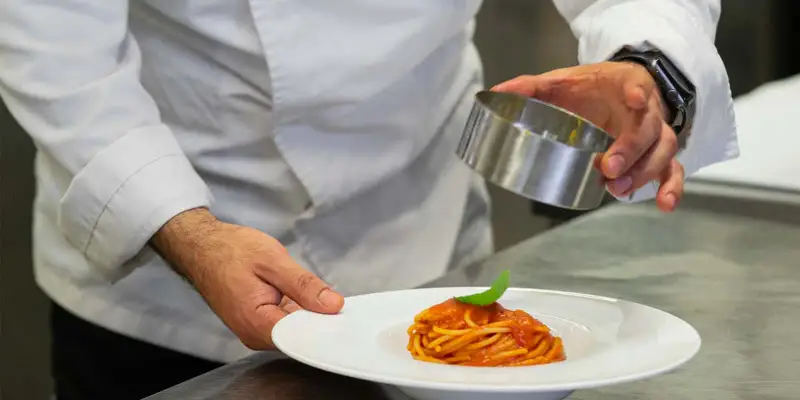
- Masseria Torre Coccaro: the main restaurant, Egnathia, occupies the old stables with their seventeenth-century star vaults and cooks with produce from the masseria's organic farm. On the seafront are the Coccaro Beach Club, with fish and sushi, and Le Palme, with fish and a pizzeria.
- Masseria Torre Maizza: Carosello is housed in the old stables and offers a seasonal Apulian menu by Fulvio Pierangelini; in summer, dinner is served under the pergola, with live music.
- Borgo Egnazia: eight restaurants. Due Camini, by chef Domingo Schingaro, is built around vegetables and Apulian produce and held one Michelin star every year from 2019 to 2024.
- Masseria San Domenico: a hotel since 1996 in a fifteenth-century tower of the Knights of Malta, reserved for guests aged 14 and over; its Play & Stay package includes three dinners at the San Domenico restaurant.
Which Primitivo labels are on the list is best asked of the sommelier, and it is a question worth asking.
After the round: the two courses of the area
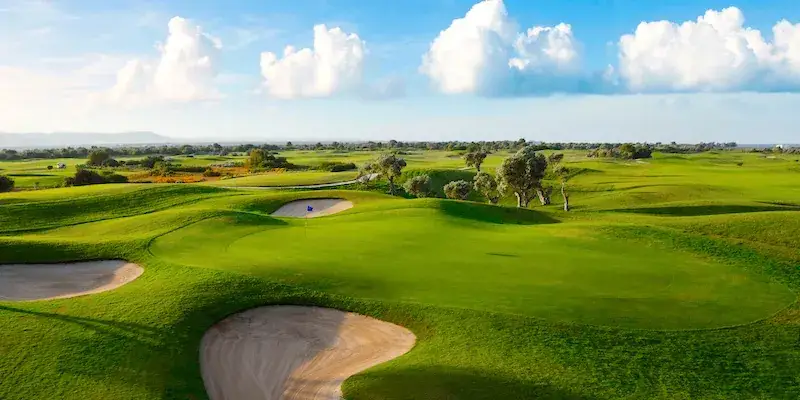
The reference course is San Domenico Golf, 18 holes, par 72, over 6,300 metres along the coast, with the sea in view from every hole. For guests of San Domenico Hotels the club applies a special rate in 2026: 65 to 105 euros for 18 holes depending on the season, against 95 to 150 for the public. At Masseria Torre Coccaro there is instead a nine-hole executive course, the Coccaro Golf Club: par 27, about 1,150 metres, suited to an hour of short play before dinner.
Curiosities
- A name that speaks of haste. According to Wikipedia, Primitivo comes from the Latin primativus, referring to the early ripening of the grape.
- The Dolce Naturale has a different yield. For the DOCG the rules limit production to 7 tonnes per hectare, against 9 for the DOC.
- Watchtowers turned into hotels. Torre Coccaro and Torre Maizza were built in the sixteenth century as defences against raids; the restoration as a hotel came in 1996 for San Domenico and in 2019 for Torre Maizza.
Frequently asked questions
Is Primitivo di Manduria made in Fasano?+
No. The rules list the municipalities of the production zone in the provinces of Taranto and Brindisi; for Brindisi they are only Erchie, Oria and Torre Santa Susanna. Fasano is not on the list.
How much alcohol does a Primitivo di Manduria have?+
According to the rules, at least 13.50% vol total for the DOC and 14.00% for the Riserva. The Dolce Naturale DOCG has 16% vol total, of which 13% actual.
What is the difference between Primitivo di Manduria DOC and Riserva?+
The Riserva requires grapes with more natural alcohol (13.50% against 13.00%) and 24 months of ageing, at least 9 of them in wood. It can be released to market only two years after the 31 March following the harvest.
Is Primitivo di Manduria Dolce Naturale a dry wine?+
No: it is sweet. The rules set residual sugar at not less than 50 grams per litre and describe it as sweet and velvety.
Which masserie in Savelletri have a restaurant?+
Torre Coccaro has Egnathia and two beach clubs, Torre Maizza has Carosello, Borgo Egnazia has eight restaurants including Due Camini. Masseria San Domenico has the San Domenico restaurant.
Can you play golf near these masserie?+
Yes: San Domenico Golf has 18 holes, while Torre Coccaro and Torre Maizza have a par-27 nine-hole executive course nearby.