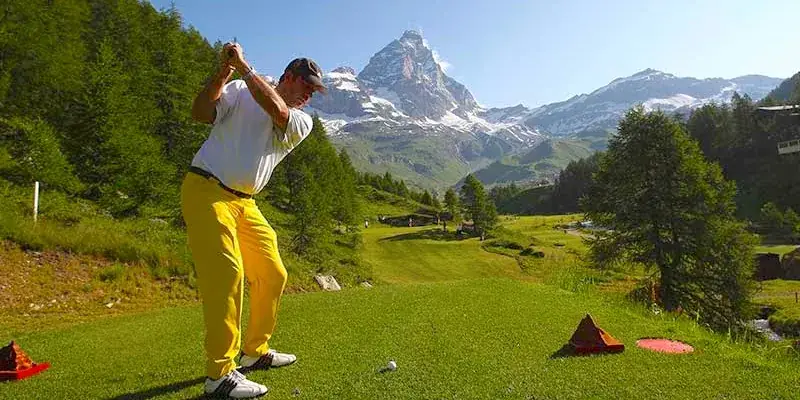
For every kilometre of altitude the standard atmosphere loses 6.5 degrees, and Cervino plays at 2,050 metres. Anyone who heads up in June in a polo and shorts soon finds that mountain golf is played in layers, and that the sun does more damage than the cold.
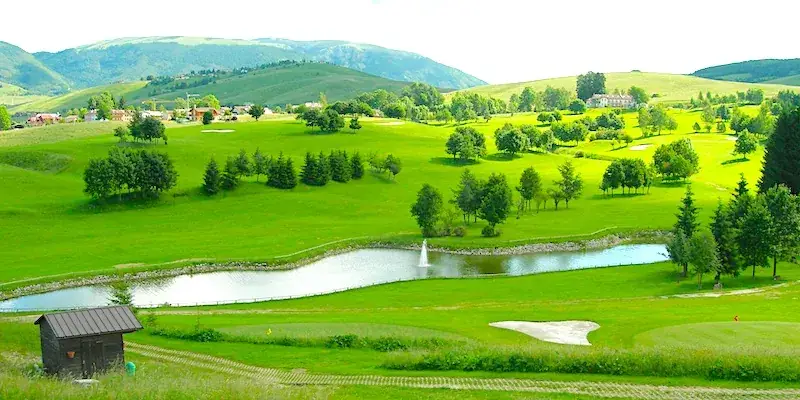
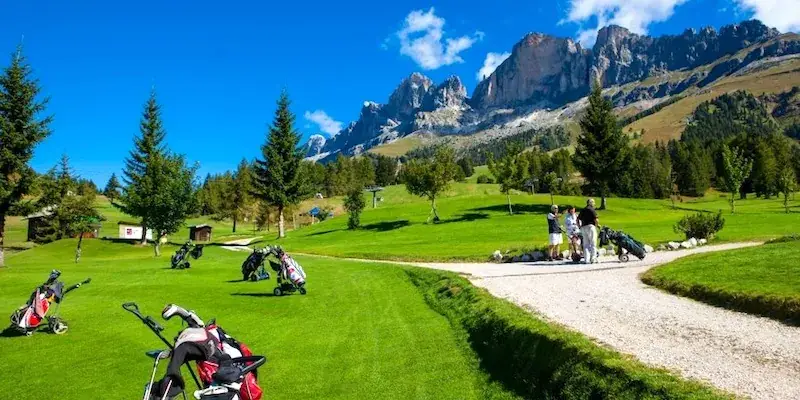
At Cervino the altitude is 2,050 metres, at Carezza 1,680, at Campo Carlo Magno 1,650, at Lanzo 1,000. It is golf with the same ball and the same rules, but played in different air: cooler, brighter, less predictable. The good news is that dressing well comes down to understanding three factors: temperature, sun and weather.
Temperature: why a polo is not enough at midday
According to the standard atmosphere defined by ICAO, the temperature drops by 6.5 °C for every kilometre of altitude. It is a simplified model: real temperature does not always fall so regularly, and in inversions it can even rise. But it says something useful: between the plains and a course at 1,500-2,000 metres the difference is noticeable, and it is most noticeable at the start and end of the season, when the mountain courses open (Cervino, in 2026, from 30 May to 13 September; Campo Carlo Magno from 19 June).
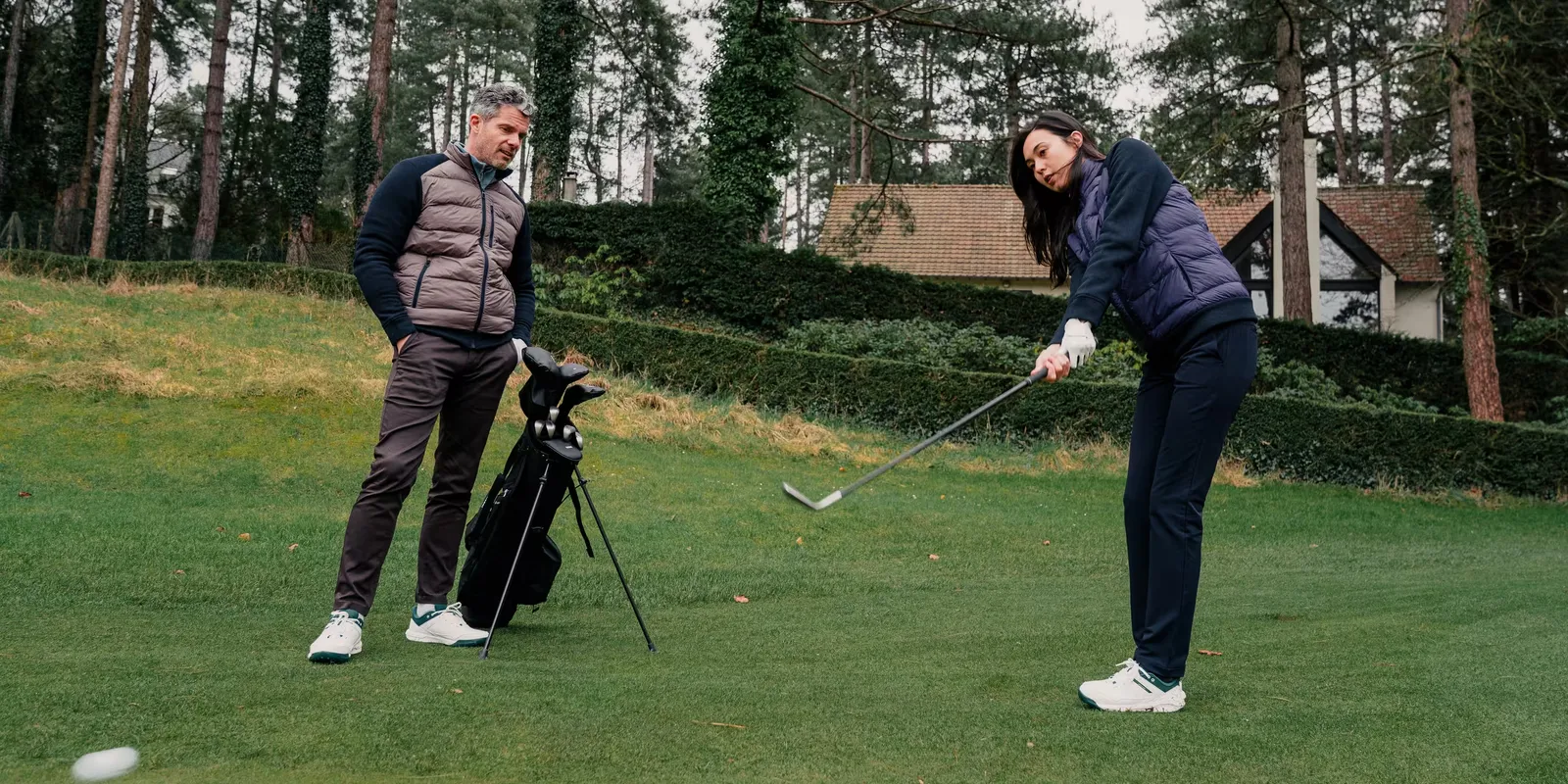
The practical rule is to dress in layers:
- Base: a technical polo, short- or long-sleeved depending on the hour.
- Warm layer: a light fleece or a padded vest, which comes off without stopping play.
- Outer layer: a windproof jacket, kept in the bag.
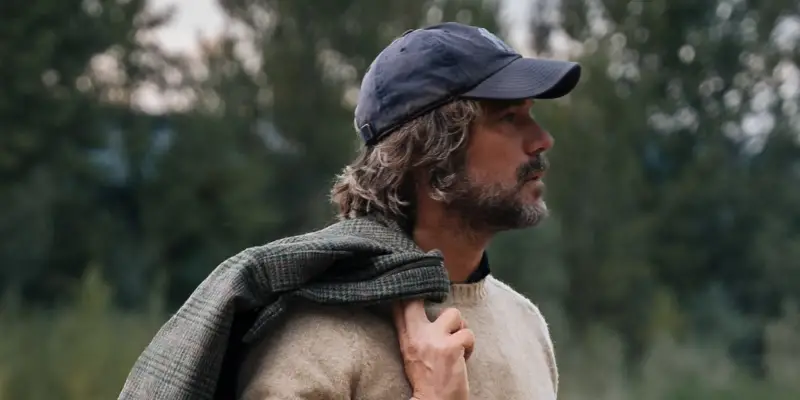
- Head and hands: a cap or headband for morning tee times and an extra golf glove.
This is editorial advice, not a club rule. The dress code, instead, is written by each club in its own regulations: before setting off, read the one for Campo Carlo Magno or for the course you have chosen.
Sun: at altitude the risk is higher
The WHO states that levels of ultraviolet radiation increase with altitude, because thinner air absorbs less of it, and that reflective surfaces such as water, sand and fresh snow increase exposure. For a mountain course in June, with the peaks still snow-covered, this means something concrete: face and neck can burn even in cool air.
What to do:
- High-factor sunscreen, reapplied midway through the round, on face, neck and the backs of the hands.
- A wide-brimmed hat or visor, and wraparound sunglasses.
- Light long sleeves if the round lasts four hours: they cover without overheating.
The uphill round: shoes, elevation change, pace
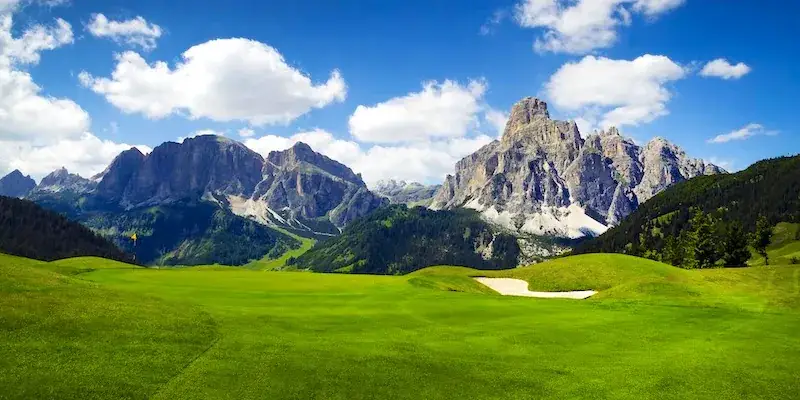
Some Alpine courses have real elevation changes. The Golf Club Carezza, on the pass beneath the Catinaccio, calls itself "The Mountain Beast" because over a round you climb up to 400 metres of elevation; Alta Badia has a 4th hole whose fairway climbs to 1,800 metres. Here the choice of shoes matters more than elsewhere: a sole with good grip, soft spikes, and a pair of spare socks. For 18-hole rounds on a nine, where the same course is played twice, a second pair of dry socks at the turn after the 9th hole makes the difference.
Weather: afternoon thunderstorms and rules
At altitude the weather can change quickly. The advice is to start early, check the local forecast and always carry a light waterproof layer in the bag.
For lightning there is a clear rule. Rule 5.7a of the Rules of Golf allows a player to stop play if they reasonably believe there is danger from lightning, without penalty, provided they report it to the Committee as soon as possible; if instead it is the Committee that suspends play with an immediate suspension, no further stroke may be played until it resumes, and a breach carries disqualification. In the mountains, where you often play on open ground and at altitude, it is best not to wait for the club's signal.
The ball flies farther: not a clothing issue
A note that concerns the game, not the wardrobe. At altitude the thinner air makes the ball fly farther. One indication, attributed to TrackMan, says that for every 10 degrees more the ball flies 1.33-1.66 yards farther depending on the club: this is why cool mornings shorten shots. The advice is to note your distances on the first nine and adjust your club selection.
Where to stay to play at altitude
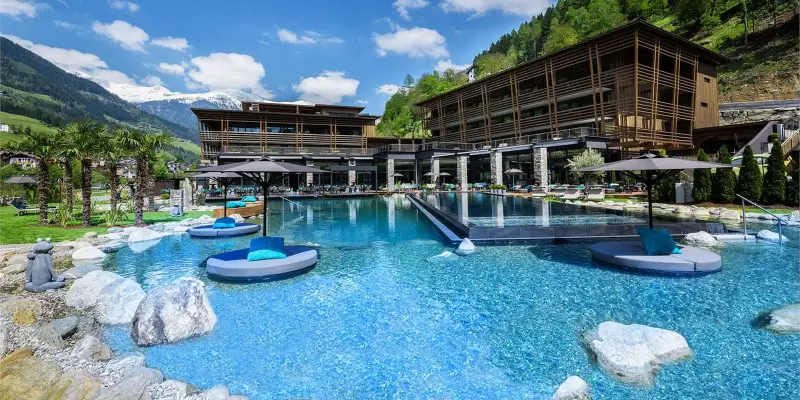
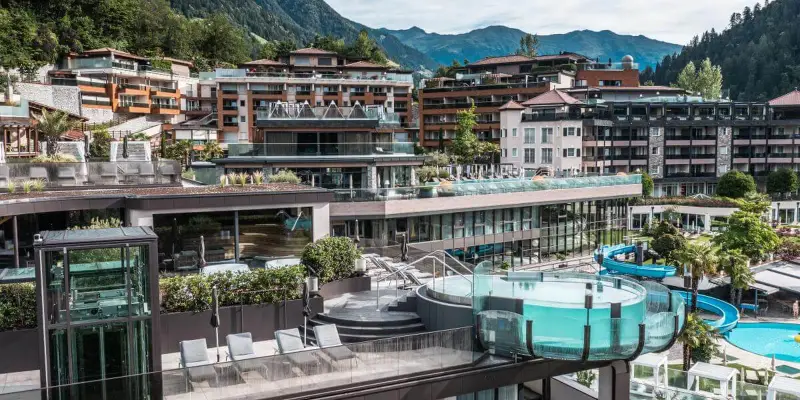
Anyone wanting to play several rounds in South Tyrol can choose a hotel with its own course: the Andreus Golf & Spa Resort stands on the course and, on rainy days, offers the TrackMan simulator with an indoor putting green at the nearby Golf Lodge, free from 8 am to 10 pm. The Quellenhof Luxury Resort Passeier is a founding member of the Passeier.Meran club, five minutes away by car, and has a 20-bay driving range, ten of them covered.
Frequently asked questions
What is the temperature on mountain golf courses?+
It depends on altitude, season and time of day. The ICAO standard atmosphere drops 6.5 °C per kilometre, but real temperature varies: for morning tee times and at the start and end of the season it pays to have a warm layer.
Can you get sunburned even when it is cool?+
Yes. The WHO indicates that UV rays increase with altitude and that fresh snow reflects them: sunscreen, a hat and sunglasses are needed even in crisp air.
Can I stop play if a thunderstorm arrives?+
Yes. Rule 5.7a allows you to stop if you reasonably believe you are in danger from lightning, without penalty, provided you report it to the Committee as soon as possible.
When do mountain courses open?+
It depends on the club: in 2026 Cervino declares its opening from 30 May to 13 September, Campo Carlo Magno from 19 June. Always check the dates on the club's website.
Do I need special shoes for uphill courses?+
You need golf shoes with good grip and soft spikes, and it pays to bring spare socks. At Carezza the elevation change over a round reaches up to 400 metres.
Does the ball really fly farther at altitude?+
Yes: at altitude the air is thinner and the ball flies farther. Note your real distances on the first nine and choose your club accordingly.